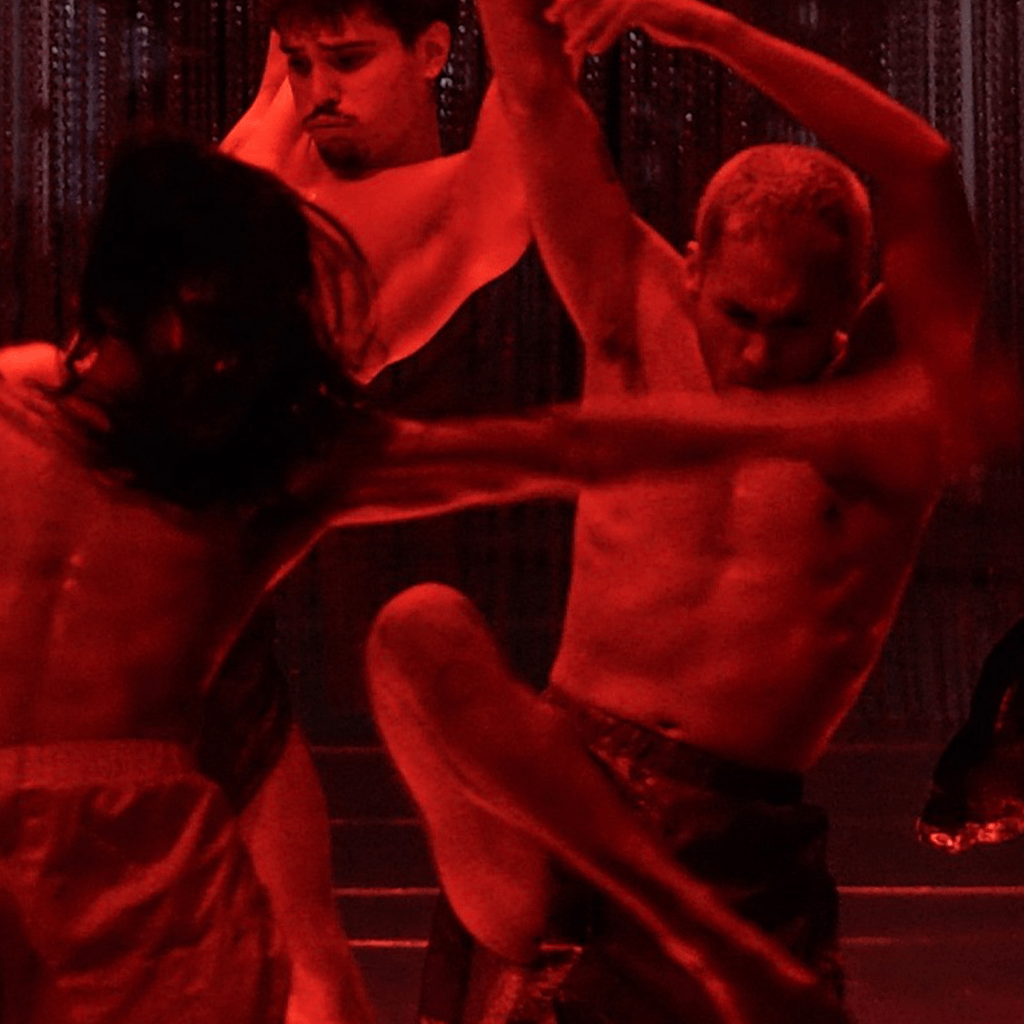
You can’t live in the Netherlands for long without encountering certain names. Willem van Oranje is one of them.
However knowing the name and actually understanding the person, the politics and the history behind it are quite different things.
When I moved from Australia to the Netherlands as an adult, nobody handed me all the Dutch history lessons I missed at school.
Willem van Oranje – De Musical recently gave me a wonderful way to “catch up” on some gaps in my Dutch historical knowledge.
On 17 June 2026, I went with my family to see the performance in Delft.
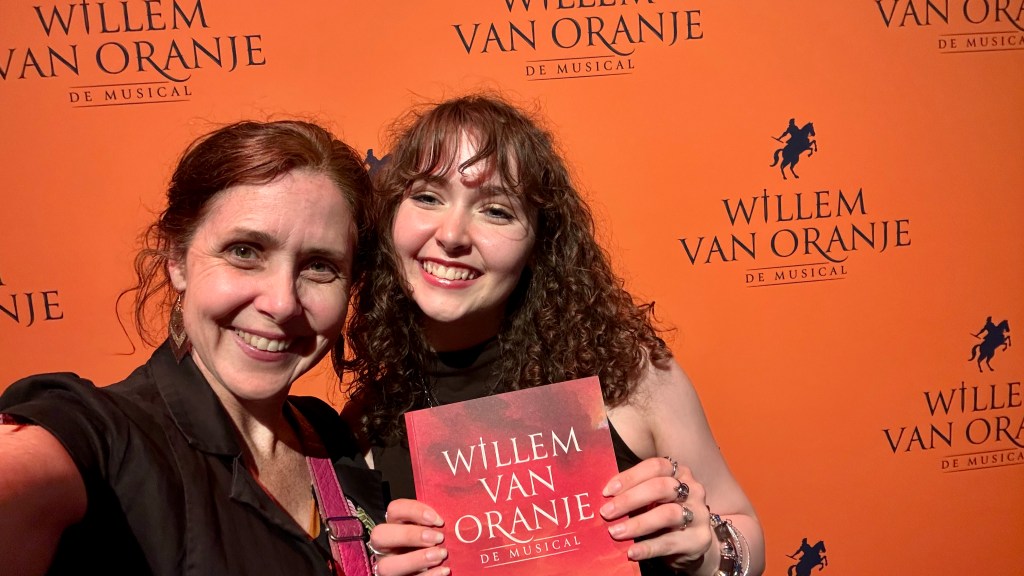
We were incredibly impressed.
The production is ambitious, engaging and full of surprises.
It is long, at around three hours, but there is an interval, which gives you a chance to process it a little halfway through.
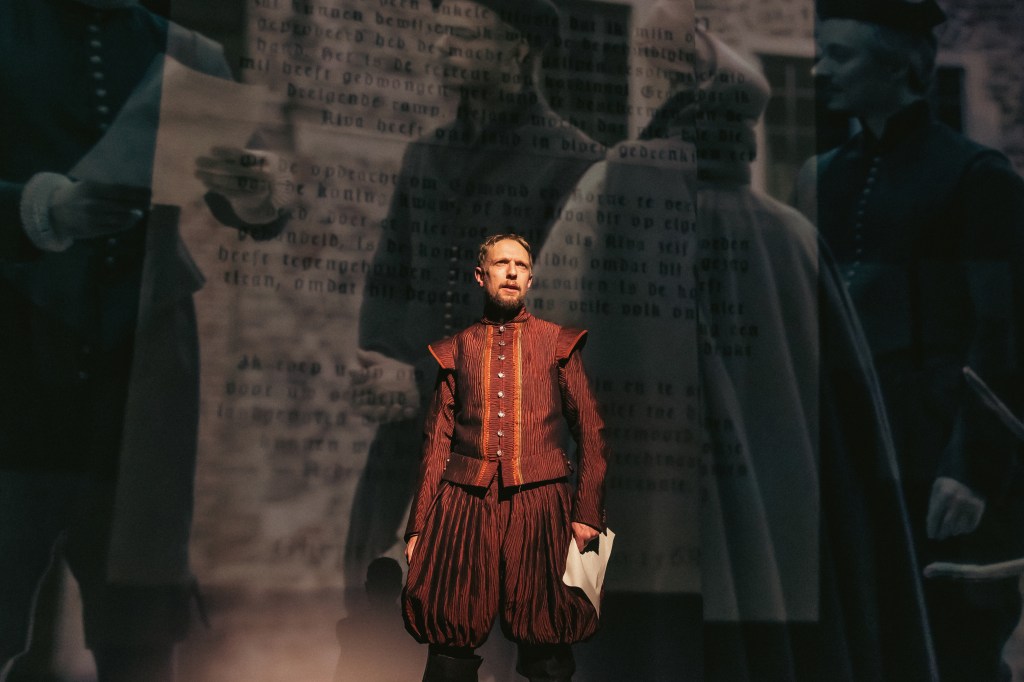
All of the cast were fantastic. The quality of the production and the emotions portrayed in the acting and songs was something I truly felt deeply. Joris Willem Smit was particularly compelling in the demanding central role of Willem van Oranje.
The musical score is beautiful and the dialogue and songs are well balanced. As is befitting for the location and story, these are all in the Dutch language.
As a dual national Dutch Australian, but not a native “Nederlander”, I went along with a question in mind: Would internationals get enough out of this very Dutch musical to make it worth going?
By “internationals” I mean those like myself, who don’t speak Dutch as a native language but live in the Netherlands, whether long or short term. But also perhaps tourists who are visiting our beautiful city and don’t speak Dutch at all.
Having now seen it for myself, I believe the answer is yes.
If you don’t speak any Dutch, you may struggle to follow everything, but there is still plenty to enjoy.
With basic to intermediate Dutch and a little research beforehand, I’d highly recommend the experience.
En als je Nederlander bent, moet je hier echt naartoe!
Experiencing the scale of the production while also learning more about an important part of Dutch history in such an engaging way was fun and, for me, another step towards feeling more integrated here.
I’m fairly fluent in Dutch, but it is still my second language, and I have significant gaps in my knowledge of Dutch history. So although I found the whole experience amazing, there were moments when I was a little confused.
So my first recommendation would be to spend a little time reading up on the history beforehand. Even a basic understanding of the main people and events will give you more context and make the experience even richer.
There is a lot to take in, and several different aspects that I’ll explore further in this article.
A Dutch story anchored in Delft
Willem van Oranje, also known as Willem de Zwijger or William the Silent, is one of the central figures in Dutch history.
He is the “Vader des Vaderlands”, the Father of the Fatherland. His life is intertwined with the story of the Netherlands, and here in Delft his presence is particularly difficult to miss.
The musical begins with the young Willem at the court of Emperor Charles V and follows the events that transform him from a privileged nobleman into a leading figure in the revolt against Philip II of Spain. Against the background are religious persecution, the Beeldenstorm and the beginning of the Eighty Years’ War.
But the musical does not feel like a three-hour history lesson.
There are relationships, love, loyalty, betrayal, religion, politics, power and difficult choices. The historical events provide the framework, but the production gives the real insight that there were human beings at the centre of them.
It is really special to be able to experience this story in Delft itself. For anyone living here, or simply interested in the city and history, the musical adds another layer to places and names that surround us today.
Willem spent his final years in the city and was assassinated here on 10 July 1584. I had been to this exact spot earlier in the Prinsenhof museum and have also seen his monument and tomb several times in the Nieuwe Kerk. Being exposed in this way to the story behind this tragic historic event was really moving.
The custom-built theatre is not far from the city centre, near the TU Delft campus. I really felt like I left the 21st century and travelled back a few centuries in time for the evening.
The theatre is part of the experience
One of the things that I personally found so deeply engaging was the sheer scale of the production and seeing this up so close.
Not everyone enjoys being in the front row, but my daughter and I became really absorbed in the experience by feeling almost part of the action.
My partner and other daughter, sitting further back, had more of an overview of the enormous sets and everything happening around them.
I don’t think there is necessarily one “best” position. We just had different perspectives – you can choose when booking your own seat.
The Prinsentheater was built especially for this musical. Film, music and live theatre are combined on a very large scale. Rather than a traditional theatre experience where everything happens on a relatively static stage, here you sit within an immense theatrical environment.
I don’t want to explain too much about exactly what happens during the show because part of the pleasure is in the surprises.
The theatre itself has almost 1,200 seats. I haven’t yet grasped the engineering expertise behind this…but both actors AND the audience actually moves. This will be familiar to those who have previously seen Soldaat van Oranje musical, which recently closed in the Netherlands after an incredible 16-year run.
Side note – There are several interesting connections between the two productions. For example, director Theu Boermans and several members of the creative team previously worked on Soldaat van Oranje, and a number of performers have appeared in both shows. Matteo van der Grijn, who plays Lumey in Willem van Oranje, was the original Erik Hazelhoff Roelfzema in Soldaat van Oranje.
Throughout Willem van Oranje, the technical spectacle is impressive, but it would not work without the people.
With an extremely talented core cast and a large group of supporting performers, together they create enormous energy from start to finish.
The details of the set and costumes are exquisite. I often caught myself wondering “How did they do that?!” or even just….”WOW”.
The production premiered on 8 February 2026 so is now a few months in. Every actor carries their role really well. Nearly everything was flawless. Up so close, it was a privilege to see almost every expression. Despite not understanding every word, I was enthralled.
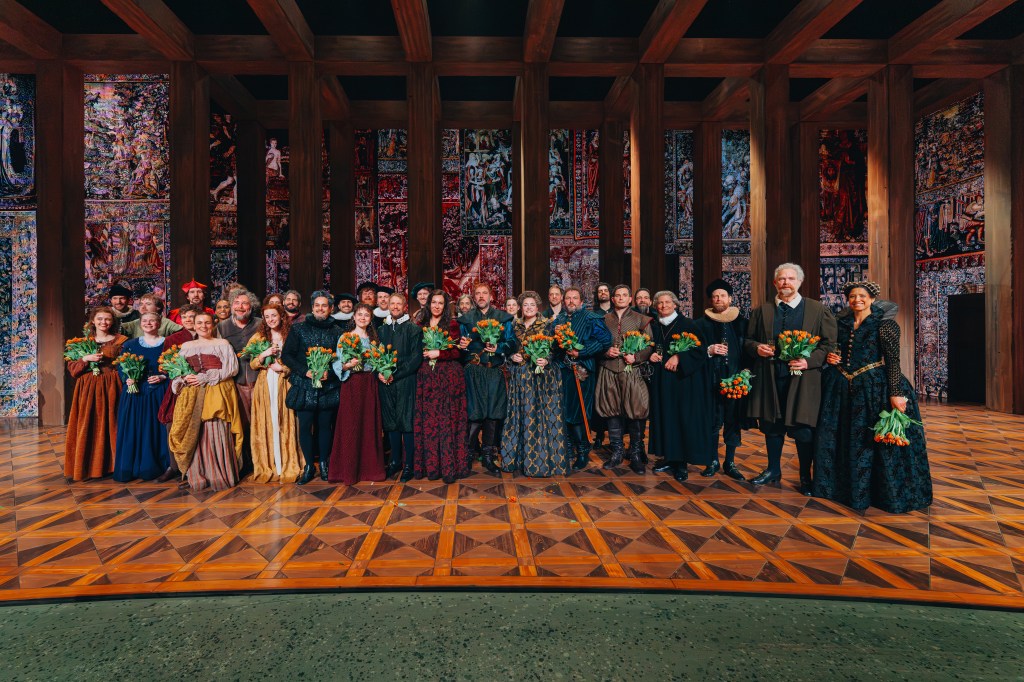
Even when spotting a few small moments that didn’t seem to go to plan – for example, when one actor just couldn’t manage to draw his sword at a point he was clearly meant to – the show just “went on” in a highly professional manner. For me, this added further to the charm.
I truly was in awe and sincerely applaud all the actors.
Joris Willem Smit in particular holds everything together as Willem, giving the historical figure a very human presence at the centre of the story.
Meet Willem van Oranje
In the interview below, recorded in October 2025 before the production process began, Joris talks about the man he was preparing to play.
He explains who Willem van Oranje was, what he meant to the Netherlands and why his story occupies such an important place in Dutch history. He also discusses the origins of the musical and his first thoughts about taking on such an iconic role.
The interview is in Dutch, but for those who understand the language it is a useful introduction to both Willem and the actor who brings him to life.
If you don’t (yet) speak Dutch, the settings give an option for automatic translation.
What if you are not a (native) Dutch speaker?
The musical itself is entirely in Dutch, so this is an obvious consideration for international visitors.
Though quite fluent myself, I was still quite confused at times. I came away thinking that I should have refreshed and deepened my knowledge of the historical context before going.
There are political alliances, religious divisions, relationships and historical figures that Dutch audience members may already know from school. Understanding that background seems to make it easier for them to appreciate the performance on a deeper level.
If Dutch isn’t your first language, and even if you barely speak it, you could still simply go along and enjoy the scale of this production. It may even inspire you, like it did me, to continue practicing the language and learning some more history.
The Willem van Oranje website has a useful history section which I would strongly recommend reading beforehand. It provides a straightforward timeline from Willem’s birth in 1533 through the major events of his life and then gives more detailed background on the religious tensions in Europe, Charles V, Philip II, the Beeldenstorm and the beginning of the Eighty Years’ War.
The page itself is in Dutch, but browser translation makes that relatively easy to overcome for English speakers:
https://www.willemvanoranje.nl/geschiedenis
This Wikipedia entry in English is also a good resource:
https://en.wikipedia.org/wiki/William_the_Silent
With a little preparation in this way, you certainly do not have to understand every word to appreciate the production.
Overall, there is so much visual storytelling through the acting, costumes, music, projections, movement and extraordinary sets that the spectacle itself communicates a great deal.
Perhaps I need to see it again
One of the things I enjoy about living in another country is that I’m always learning new things.
A Dutch person may have already encountered Willem van Oranje, Philip II, the Watergeuzen, the Beeldenstorm and the Eighty Years’ War at school. Those of us who arrived later often collect that history in pieces through language lessons, museums, books, conversations and the places around us.
Willem van Oranje – De Musical brings many of those pieces together in spectacular fashion.
I went simply expecting a fun night at the theatre with my family. I came away genuinely captivated by the production and its actors.
What had a longer term impact is that even months later, I find myself still thinking about it and wanting to understand more about the history, as well as how the whole musical was put together.
Perhaps I should have done a little more research before I went.
Or perhaps I just have to go again.
Tickets are currently available from September 2026 through to January 2027.
More information & tickets
https://www.willemvanoranje.nl
What is Delft Online?
Delft Online is an English-language community platform sharing news, events, stories and practical information for internationals and internationally minded locals in Delft and the surrounding area. We are a social enterprise with a focus on community and inclusion.
This site was established in 2022 by Renée Tentori as a sister site to The Hague Online, which has been sharing English-language news, events and information for the international community for 21 years.
Delft has its own strong identity, international community, cultural life and innovation ecosystem, and deserves its own dedicated English-language platform. Delft Online is still growing, with the aim of highlighting more local stories, events and initiatives in English for people who live, work, study in or regularly visit Delft.
Contact us if you’d like to know more or share your story.